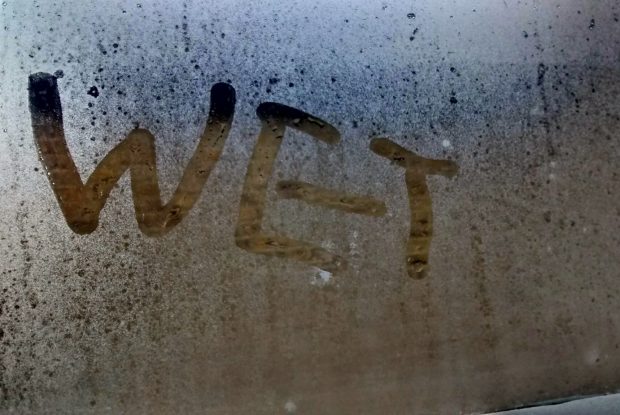
It’s no secret that damp problems can scare off potential buyers. Indeed, in a 2016 survey, conducted by YouGov on behalf of Safeguard Europe (survey results – PDF), 87% of people stated that signs of damp would put them off buying a home they had viewed.
If you are considering selling a property with a known damp issue it is sensible to take measures to resolve the problem before it goes on the market. This will save you accepting a reduced price or even losing out on the sale altogether.
This blog post, by guest contributor Paul Lawless of property preservation experts Peter Cox, looks at how to resolve damp problems and get your home back into top condition.
1. Take action to reduce condensation
When most people think of damp problems like stains on walls, peeling decorations or black mould, they don’t automatically think of condensation. However, condensation is actually the most common cause of damp in the UK. Our experience tells us many people assume these effects are caused by more severe issues when in fact some simple lifestyle changes could quickly eradicate damp problems and get the home in great condition for a sale.
For some quick and easy condensation fixes you should:
Regularly ventilate the home
Simply opening a window is the best way to introduce a source of fresh air to flush out and replace damp and humid air trapped in the property. We know this isn’t always pleasant in the winter, but even opening windows for a short period in the morning will be beneficial for you.
Maintain a constant temperature
If problematic ‘cold spots’ in the home attract condensation then setting your thermostat to maintain a constant temperature across different rooms will help to avoid this problem.
Use extractor fans and dehumidifiers routinely
Kitchens and bathrooms are the two rooms where we tend to release the most moisture-heavy air into the atmosphere of our homes. Extractor fans and dehumidifiers help combat the worst effects.
Dry clothes outside whenever possible
This can be tricky in winter months with frequent showers and occasional snow, but drying clothes outside allows all the water vapour held in your wet clothes to safely disperse outside. If you must dry them indoors we recommend doing so in a closed room with an open window.
Generally these simple steps are enough to tackle all but the most persistent condensation problems. However, if you have taken the advice above and are still experiencing problems with condensation, you may have to consider installing a ventilation unit to solve the issue before selling your home.
2. What to do about rising damp
The words ‘rising damp’ are enough to strike fear into any homebuyer’s heart, never mind actually coming face to face with its signature ‘tide mark’ staining along ground floor walls. Ultimately, rising damp is so infamous among homeowners and buyers because it means remedial treatment is a necessity.
Rising damp occurs when the property’s damp proof course breaks down due to age or deterioration (subsidence can also contribute). This allows groundwater to travel up through bricks and mortar in a process called ‘capillary action’. Once the damp proof course has been compromised, the damp situation can only deteriorate. It will only improve if a remedial damp proof course is installed.
However, rising damp is one of the most misdiagnosed issues in the property preservation industry. Other forms of damp are often incorrectly labelled as rising damp by inexperienced or unqualified tradespeople. Expensive repair treatments are put in place and are utterly ineffective because they fail to address the underlying issue, which might be condensation or some other form of damp. We recommend you contact a specialist damp proofing surveyor to attend the property and confirm if the house really is suffering from rising damp before you make any moves to repair it.
3. Deal with penetrating damp
If your damp problem is spreading out from just one location, or can be found on the ceiling or high up on internal walls, then penetrating damp is the most likely culprit. Prospective buyers will rightfully be put off by this because it means there is a fault somewhere on the external side of the property allowing water ingress.
To resolve penetrating damp problems before you get a valuation on your house you should note where the damp is appearing in your home and take a look outside at the corresponding spot to see if you can find the fault. The usual suspects are broken or missing roof tiles, clogged downpipes and gutters, or cracks in external render.
If the required repair work is minor you may be able to resolve the problem yourself using some DIY. In cases where the penetrating damp problem has persisted for an extended period of time it would also be worth checking the property to make sure the damp has not caused more severe problems like wet rot or dry rot.
4. If you are unsure what to do: seek professional advice
We hope this blog has provided you with enough information to identify and start to resolve damp problems before your home goes on the market. However we recognise this is easier said than done, and not all damp problems are easy to diagnose.
If you feel you would benefit from getting some advice and guidance from a professional damp proofing surveyor we strongly recommend you seek out a Property Care Association qualified specialist, with the required accreditations and capabilities to offer long term meaningful guarantees. This will mean you can feel confident that any advice given and work conducted will be to the highest industry standard.